

A reflection from the House of Wisdom on the resilience, ingenuity, and profound cycles of life on Earth.
We now turn to the most remarkable phenomenon in the known universe: life itself. A force of incredible tenacity, creativity, and resilience. The story of life is a testament to a core Quranic principle, a cycle of creation, cessation, and renewal that serves as a sign for our own ultimate destiny:
يُخْرِجُ الْحَيَّ مِنَ الْمَيِّتِ وَيُخْرِجُ الْمَيِّتَ مِنَ الْحَيِّ وَيُحْيِي الْأَرْضَ بَعْدَ مَوْتِهَا ۚ وَكَذَٰلِكَ تُخْرَجُونَ
“He brings the living out of the dead and brings the dead out of the living and brings to life the earth after its lifelessness. And thus will you be brought out.” (Surah Ar-Rum, 30:19)
This verse speaks not only of the seasons or the decay and growth of organisms, but of the grand sweep of life’s history on Earth—a story of emergence from non-life, of flourishing and diversification, and of persistence through cycles of mass extinction.
The Spark of Life and the Great Renewal
One of the deepest mysteries in science is abiogenesis: the origin of life from non-living matter. Scientists believe this momentous event occurred between roughly 4.2 and 3.5 billion years ago. For billions of years, life remained simple. Then, around 541 million years ago, the Cambrian Explosion saw the diversity of animal life explode, with the ancestors of almost all modern animal phyla appearing in a relatively short span of geological time.
This vibrant history, however, is written against a backdrop of immense loss. Scientists estimate that over 99% of all species that have ever lived on this planet have gone extinct. The journey of life has been punctuated by at least five great mass extinction events, where a significant percentage of all species were wiped out in a geological instant:
- The End-Ordovician Extinction (~445 Ma)
- The Late Devonian Extinction (~375 Ma)
- The End-Permian Extinction, or “The Great Dying” (~252 Ma)
- The End-Triassic Extinction (~201 Ma)
- The Cretaceous-Paleogene (K-Pg) Extinction (~66 Ma), which wiped out the non-avian dinosaurs.
This history can sound like a story of failure. But if we look closer, we see a different pattern: the Quranic principle of “bringing the living out of the dead” enacted on a planetary scale. The K-Pg extinction was an unimaginable catastrophe for the dinosaurs, but it was not the end of life. It was a planetary reset. It opened up ecological niches that allowed for the explosive diversification of a group of small creatures that had been living in the dinosaurs’ shadows: the mammals. Without the death of their world, our own could never have been born.
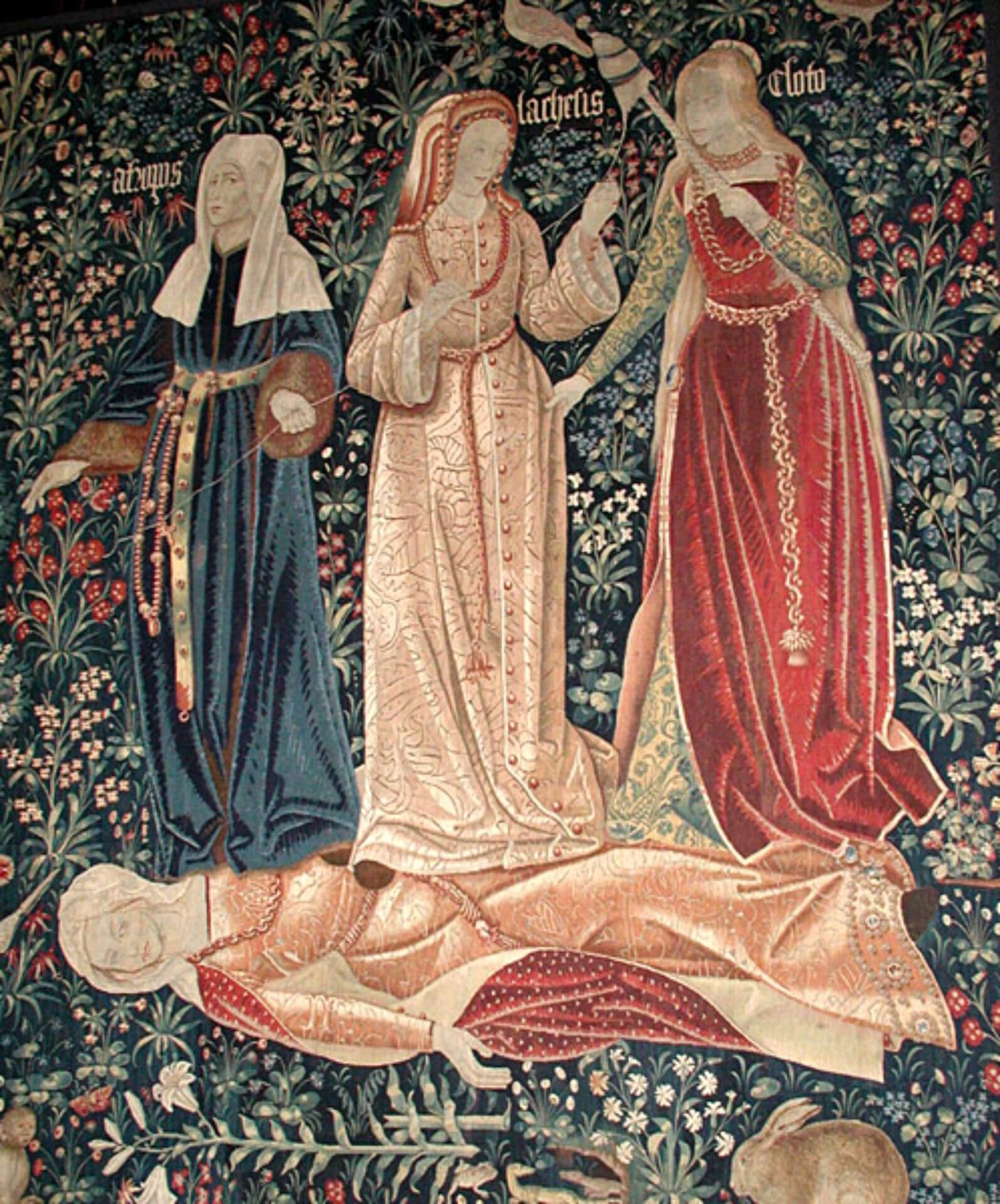
Life is not a static museum of perfect, unchanging forms. It is a dynamic tapestry, constantly being unraveled and re-woven. The fossil record is not a story of failure, but of renewal. And in this great natural cycle of life from death, the Quran tells us to see a sign for a greater reality: “…And thus will you be brought out.”
Nature’s Marvels: Signs for Those Who Reflect
The tapestry of life is woven with threads of such ingenuity and elegance that they defy explanation by mere chance. The natural world is filled with ayat—signs—for those who are willing to look and reflect.
Consider the miracle of photosynthesis. From sunlight, water, and a gas in the air (carbon dioxide), plants build themselves, creating the very foundation of nearly every ecosystem on land.
Or consider the periodical cicada of North America. These insects spend 13 or 17 years underground before emerging in massive, synchronized swarms. Why these specific, large, prime numbers? It is a brilliant evolutionary strategy. A predator with a 2, 3, 4, or 6-year life cycle will rarely, if ever, synchronize with a 13 or 17-year-old prey. The prime number cycle minimizes the frequency of intersection, ensuring the survival of the species through sheer mathematics. Who taught this humble insect number theory?
The interdependence of life is another profound sign. One out of every three mouthfuls of the food we consume is made possible by the work of an insect pollinator. Our global food system rests on the shoulders of these tiny, unpaid workers.
It is this hidden complexity that visionary biologists like E.O. Wilson and Karl von Frisch dedicated their lives to uncovering, revealing intricate social structures and symbolic languages in ants and bees. They showed us that worlds of profound wisdom exist right under our feet, if only we have the patience and humility to observe.
The Quran asks a powerful, rhetorical question:
أَفَرَأَيْتُم مَّا تَحْرُثُونَ * أَأَنتُمْ تَزْرَعُونَهُ أَمْ نَحْنُ الزَّارِعُونَ
“Then do you see that [seed] which you sow? Is it you who makes it grow, or are We the grower?” (Surah Al-Waqi’ah, 56:63-64)
When we witness the mathematical genius of the cicada, the world-shaping power of photosynthesis, and the intricate dance of pollination, we find the answer written in the very language of life itself. It is a sign of an intelligence, an artistry, and a purpose woven into the fabric of the living world.